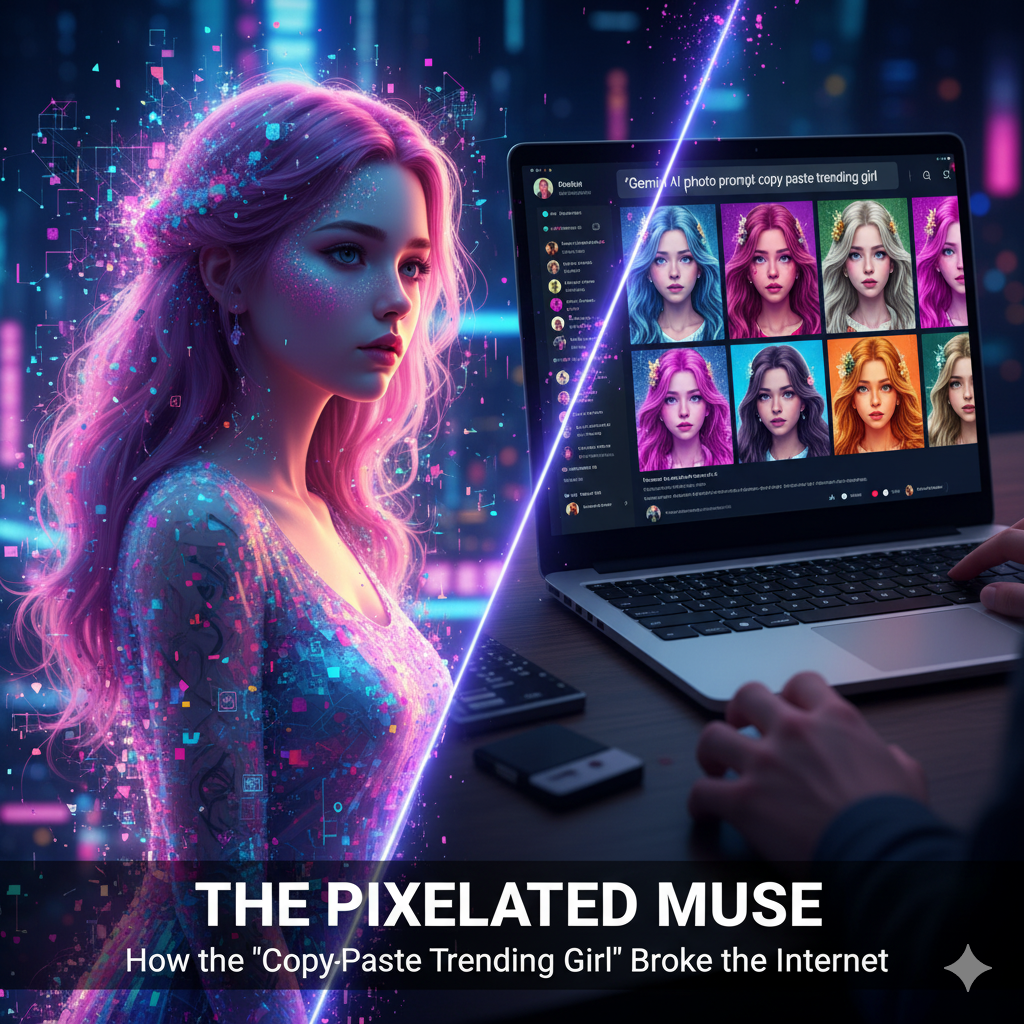
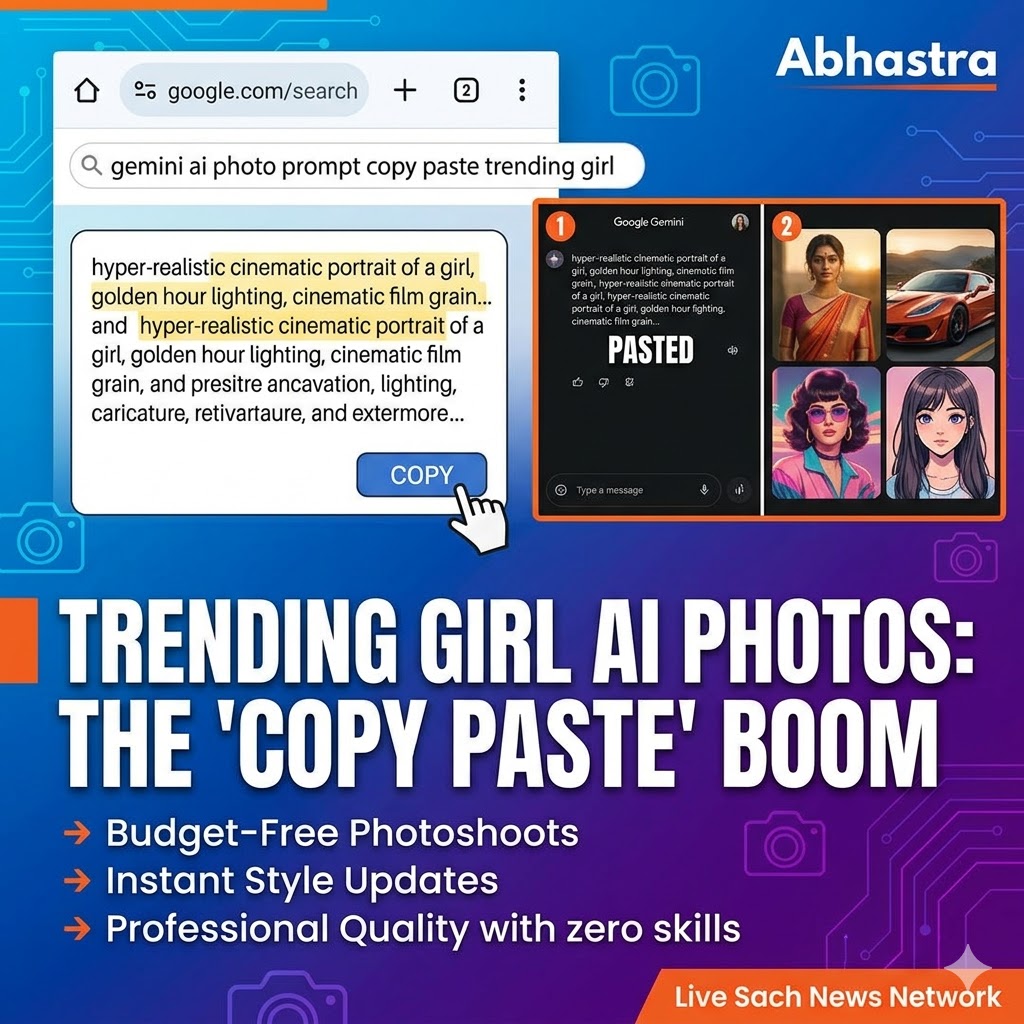
The internet’s definition of a flawless social media photo is changing, and it no longer requires a professional camera, a makeup team, or an expensive location. Across social platforms, a new digital phenomenon has taken over search engines: the quest for the perfect “Gemini AI photo prompt copy paste trending girl.”
Users are bypassing the complex learning curve of AI prompt engineering. Instead, they are searching for ready-made text blocks to copy and paste into Google Gemini, instantly generating hyper-realistic, stylish, and cinematic portraits of women.
Here is a deep dive into this viral trend, the specific aesthetics dominating the internet, and how creators are using these tools.
The Power of the “Copy Paste” Prompt
An AI photo editing prompt is essentially a text instruction that tells the AI tool exactly how a photo should look. These prompts include meticulous details regarding lighting, background, style, outfits, and even camera lens quality. The fundamental rule of this new medium is simple: the better the prompt, the better the AI photo result.
Google Gemini has emerged as a powerful platform for this, generating hyper-realistic images by translating these detailed text prompts into visuals that rival real-world photography standards.
The Top 4 “Trending Girl” Aesthetics
Based on recent digital trends, users are consistently copying and pasting prompts to generate specific aesthetic categories:
- The Cinematic Saree & Cultural Elegance: Creators are generating highly detailed portraits by asking the AI for girls in flowing silk or heavy red Banarasi sarees. These prompts often specify “traditional Indian jewelry,” “soft bokeh backgrounds,” and “golden hour lighting” to create an editorial magazine style.
- The Luxury Car Lifestyle: A massive trend involves prompts that place a confident, stylish young woman posing beside luxury sports cars, SUVs, or convertibles. These text blocks specifically dictate outfits—like leather jackets, summer dresses, or deep red formal blazers—and dramatic lighting, such as a “neon-lit downtown street at night” or “golden hour sunset”.
- Dreamy, Retro, & 90s Film Vibes: Users are heavily utilizing prompts designed to create vintage and nostalgic tones. These include requests for “1990s analogue film” styles, soft pastel colors, and romantic moods, often featuring props like red roses or foggy cafe windows.
- Kawaii Anime & 3D Caricatures: Beyond realism, there is a huge demand for “kawaii anime AI girl” prompts featuring elements like pink twin tails and school uniforms in a vibrant, cel-shaded style.
Why This Trend is Exploding
The appeal of the “copy paste” method lies in its accessibility and economic efficiency.
- No Photography Budget Required: AI tools like Gemini eliminate the need for expensive photoshoots and equipment.
- Instant Trend Alignment: Detailed prompt engineering allows users to effortlessly align their digital presence with current Instagram trends, creating high-quality visuals with professional lighting and composition.
- Rapid Experimentation: Creators can test multiple fashion styles, from streetwear to elegant evening gowns, in seconds without needing physical wardrobe changes.
How to Master the AI Generation Process
While copying and pasting is the easiest entry point, achieving the best results requires a structured approach:
- Define Your Goal: Decide if the image is meant for branding, storytelling, or social engagement.
- Specify Visual Details: Clearly state the desired outfit, pose, lighting conditions, and environment in the text.
- Add Emotional Cues: Incorporate descriptive words like “bold,” “calm,” or “vibrant” to guide the mood of the generated image.
As AI models continue to evolve, the barrier between imagination and visual creation is vanishing. The “trending girl” of today might just be a flawlessly executed string of text, born in a server and pasted into existence.