Categories
Social Media

End of the “Ghost Number” Era: DoT Mandates Active SIM Linking for WhatsApp and Telegram

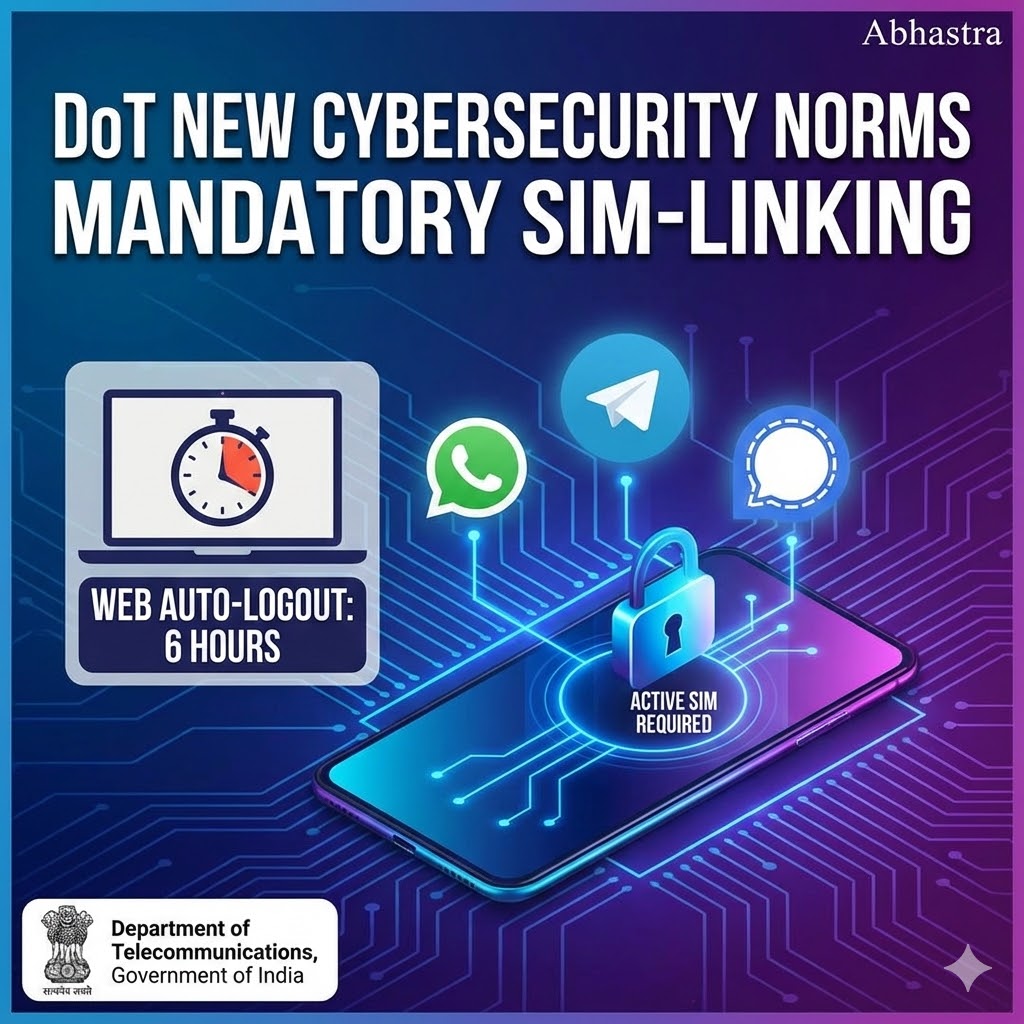
NEW DELHI — The days of using WhatsApp or Telegram on a phone without its original SIM card are numbered. In a sweeping move to crack down on cyber fraud, the Department of Telecommunications (DoT) has issued a strict directive: No active SIM, no messaging app.

This new rule, part of the Telecommunication Cybersecurity Amendment Rules, 2025, targets a massive loophole used by scammers—the ability to operate accounts using virtual numbers or SIM cards that have long been discarded.

The Core Mandate: “SIM Binding”

For years, the setup was simple: put in a SIM, get an OTP, and your WhatsApp account is live. You could then remove the SIM, throw it away, or even leave the country, and the app would keep working on Wi-Fi.

This convenience has now become a security nightmare. Scammers sitting outside India have been using local numbers to orchestrate “digital arrests” and financial fraud without any physical trace.

To stop this, the DoT has ordered all “Telecommunication Identifier User Entities” (TIUEs)—which includes WhatsApp, Telegram, Signal, and Snapchat—to enforce “SIM Binding.”

  • The New Reality: The app must continuously verify that the SIM card used for registration is physically present in the device. If you remove the SIM, the app stops working.

The 6-Hour Web Logout Rule

The crackdown doesn’t stop at mobile phones. The desktop experience is about to get much more rigorous.

Under the new norms, web versions of these apps (like WhatsApp Web) cannot stay logged in indefinitely. The government has mandated a periodic auto-logout every six hours.

This means if you use WhatsApp on your office laptop, you will likely need to scan a QR code to re-authenticate twice a day. While this adds friction for users, officials argue it is necessary to prevent unauthorized access to unattended sessions, a common vector for data theft.

The Timeline: 90 Days to Comply

The clock is already ticking. The DoT issued these directions on November 28, 2025, giving tech giants a 90-day window to re-engineer their systems. This implies that by February 2026, the new architecture must be live.

Companies must also submit a full compliance report within 120 days. Failure to adhere to these norms could attract severe penalties under the Telecommunications Act, 2023.

Impact on the Common User

While the move is hailed as a masterstroke against cybercrime, it brings significant changes for regular users:

  • International Travelers: You can no longer simply swap your Indian SIM for a local travel SIM and keep using your Indian WhatsApp number seamlessly. The app may require the Indian SIM to remain active in the slot.
  • Secondary Devices: Users who run accounts on Wi-Fi-only tablets or secondary phones without the primary SIM may face disruptions unless apps develop a new “linked device” protocol that satisfies the DoT.

Summary

The government’s message is clear: The anonymity of the digital space is being dismantled to protect the financial safety of citizens. While it spells the end for “ghost numbers” used by fraudsters, it also marks the beginning of a slightly more complex, verification-heavy digital life for everyone else.
Categories
Artificial intelligence

OpenAI Unveils “IndQA,” a Groundbreaking Benchmark Designed to Test AI Comprehension of India’s 12 Diverse Languages and Deep Cultural Nuances

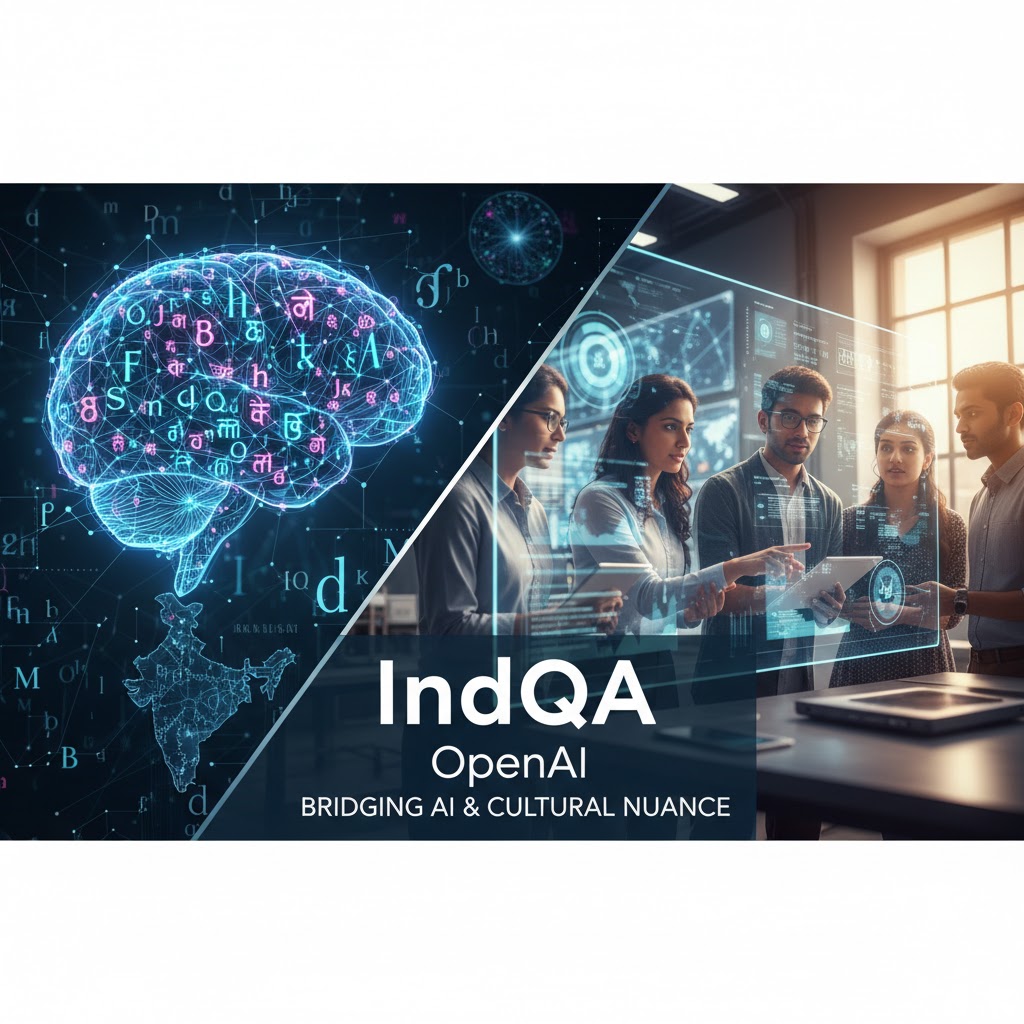
In a major strategic move to enhance the multilingual and multicultural capabilities of its technology, OpenAI has officially introduced “IndQA.” This pioneering benchmark is meticulously designed to test how effectively artificial intelligence (AI) systems can comprehend and navigate the complex tapestry of India’s diverse languages, cultural nuances, and regional contexts.

The initiative marks a significant step in the global push for more inclusive AI, starting with one of the world’s most linguistically rich regions. With India standing as ChatGPT’s second-largest market, this move underscores OpenAI’s commitment to making its technology more reliable and attuned for non-English users.

A New Standard for Cultural Authenticity

Developed in close collaboration with a diverse group of 261 domain experts from across India, IndQA is a comprehensive and robust dataset. It comprises 2,278 high-quality questions that are not only challenging but also deeply embedded in the Indian context.

What truly sets IndQA apart from conventional benchmarks like MMMLU and MGSM is its development process. OpenAI states that the content is “natively written”—meaning it was conceptualized and written directly in the local languages by experts, not created in English and then translated.

This “natively written” approach is critical. It ensures that the phrasing, intent, and cultural context of each question are authentic, testing an AI’s genuine understanding of subtle nuances, idioms, and region-specific knowledge, rather than just its ability to process literal translations.

How IndQA Works: Beyond Multiple Choice

IndQA also introduces a more sophisticated evaluation method. It moves away from simple multiple-choice testing and adopts a “rubric-based evaluation system.”

Here’s the process:

  1. The Prompt: Each question includes a culturally contextual prompt written in one of the 12 Indian languages.
  2. Verification: An English translation is provided alongside the prompt, purely for verification and clarity for a global team.
  3. The Rubric: A detailed grading rubric, created by the domain experts, accompanies each question.
  4. The Ideal Answer: An expert-level, ideal answer is provided as a gold standard.

AI models are then assessed against the specific criteria within the rubric, which carry weighted scores. This allows for a far more granular evaluation of an AI’s performance, grading it on its grasp of nuance, its reasoning capabilities, and its cultural correctness—not just a simple right or wrong.

Comprehensive Linguistic and Cultural Scope

The IndQA benchmark is ambitious in its scope, covering a significant portion of India’s linguistic and cultural landscape.

  • 12 Languages: The dataset covers Bengali, English, Hindi, Hinglish, Kannada, Marathi, Odia, Telugu, Gujarati, Malayalam, Punjabi, and Tamil.
  • 10 Cultural Domains: The questions are drawn from a wide array of cultural and intellectual areas, including:
    • Architecture & Design
    • Arts & Culture
    • Everyday Life
    • Law & Ethics
    • Media & Entertainment
    • Religion & Spirituality
    • Sports & Recreation
    • And other core areas of Indian life.

OpenAI has already begun benchmarking its most advanced models, including GPT-4o, OpenAI o3, GPT-4.5, and the anticipated GPT-5, against this new standard to measure and improve their performance.

IndQA: At a Glance

  • Total Questions: 2,278
  • Collaborators: 261 domain experts from India
  • Languages: 12 (including Hindi, Tamil, Bengali, Telugu, etc.)
  • Cultural Domains: 10 (including Arts, History, Law, Daily Life)
  • Evaluation Method: Rubric-based grading (not multiple-choice)
  • Key Feature: “Natively written” content, not translated

The Future of Inclusive AI

India was strategically chosen as the starting point for this project, not only because of its market size but because nearly a billion Indians do not use English as their primary language.

Srinivas Narayanan, CTO of B2B Applications at OpenAI, emphasized the project’s goal, stating that the aim was to ensure models grasp “the nuances every culture cares about.”

The launch of IndQA is not an endpoint. OpenAI has stated that it plans to replicate this comprehensive framework in other regions and for other cultures, using the lessons learned from the IndQA project. This signals a clear and dedicated effort to build AI systems that understand people the way they naturally speak and think, regardless of their language, ultimately fostering a more inclusive and accessible AI for the entire world.