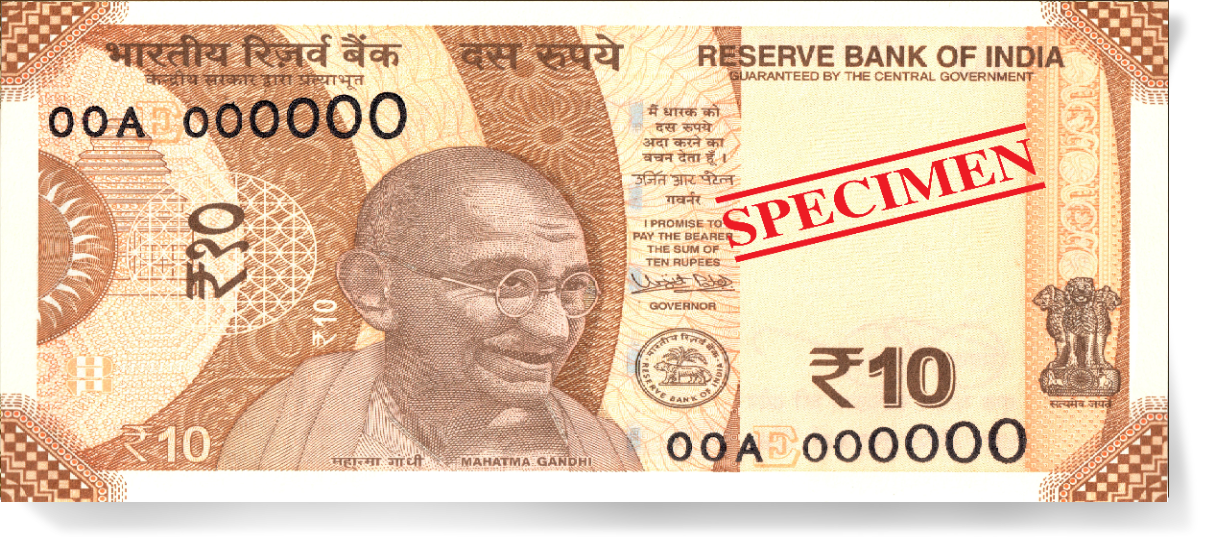
India’s currency landscape is constantly evolving, reflecting the nation’s rich heritage and commitment to modern security features. The Reserve Bank of India (RBI) periodically introduces new banknotes, and one such notable addition is the new 10 Rupee denomination note.
Issued under the Mahatma Gandhi (New) Series, this note is not merely a change in color but a thoughtful redesign incorporating cultural elements and advanced security.
A New Look: Chocolate Brown Hue
The most striking feature of the new 10 Rupee note is its distinctive chocolate brown base color. This vibrant yet earthy tone sets it apart from its predecessors and other denominations, making it easily identifiable.
Dimensions and Design
The new note measures 63 mm x 123 mm, slightly smaller than the older series, aligning with the RBI’s move towards more compact and user-friendly banknotes.
Front Side Features:
- See-through Register: A floral motif that combines to form the numeral “10” when held against light.
- Latent Image: The numeral “10” visible when the note is held at an angle.
- Denominational Numeral: “10” in Devanagari script.
- Portrait of Mahatma Gandhi: Centrally placed, with a raised print (intaglio).
- Micro Letters: “RBI,” “Bharat” (in Devanagari), “INDIA,” and “10.”
- Security Thread: A windowed security thread with inscriptions “Bharat” (in Devanagari), “RBI,” and “10.” It changes color from green to blue when the note is tilted.
- Guarantee Clause: Governor’s signature with Promise Clause and the RBI emblem.
- Ashoka Pillar Emblem: On the right side, with Mahatma Gandhi’s portrait and electrotype (10) watermark.
- Unique Numbering: Ascending font size on the number panel, from left to right.
Reverse Side Features:
- Year of Printing: On the left.
- Swachh Bharat Logo: With the slogan, promoting the Clean India mission.
- Language Panel: Fifteen languages displaying the denomination.
- Motif of Konark Sun Temple: A prominent cultural symbol, representing Odisha’s rich architectural heritage.
- Denominational Numeral: “10” in Devanagari.
Why the Change?
The introduction of new banknotes by the RBI serves multiple purposes:
- Enhanced Security: Incorporating new and advanced security features makes counterfeiting more difficult.
- Clean Note Policy: Replacing soiled and old notes with fresh ones, improving the overall quality of currency in circulation.
- Modernization: Aligning with international best practices for currency design and features.
- Cultural Representation: Highlighting significant aspects of India’s cultural heritage, like the Konark Sun Temple.
The new 10 Rupee note, with its distinctive color and intricate features, is not just a medium of exchange but also a small canvas reflecting India’s journey and identity. As these notes increasingly circulate, they silently tell a story of tradition meeting modernity in the palm of our hands.